
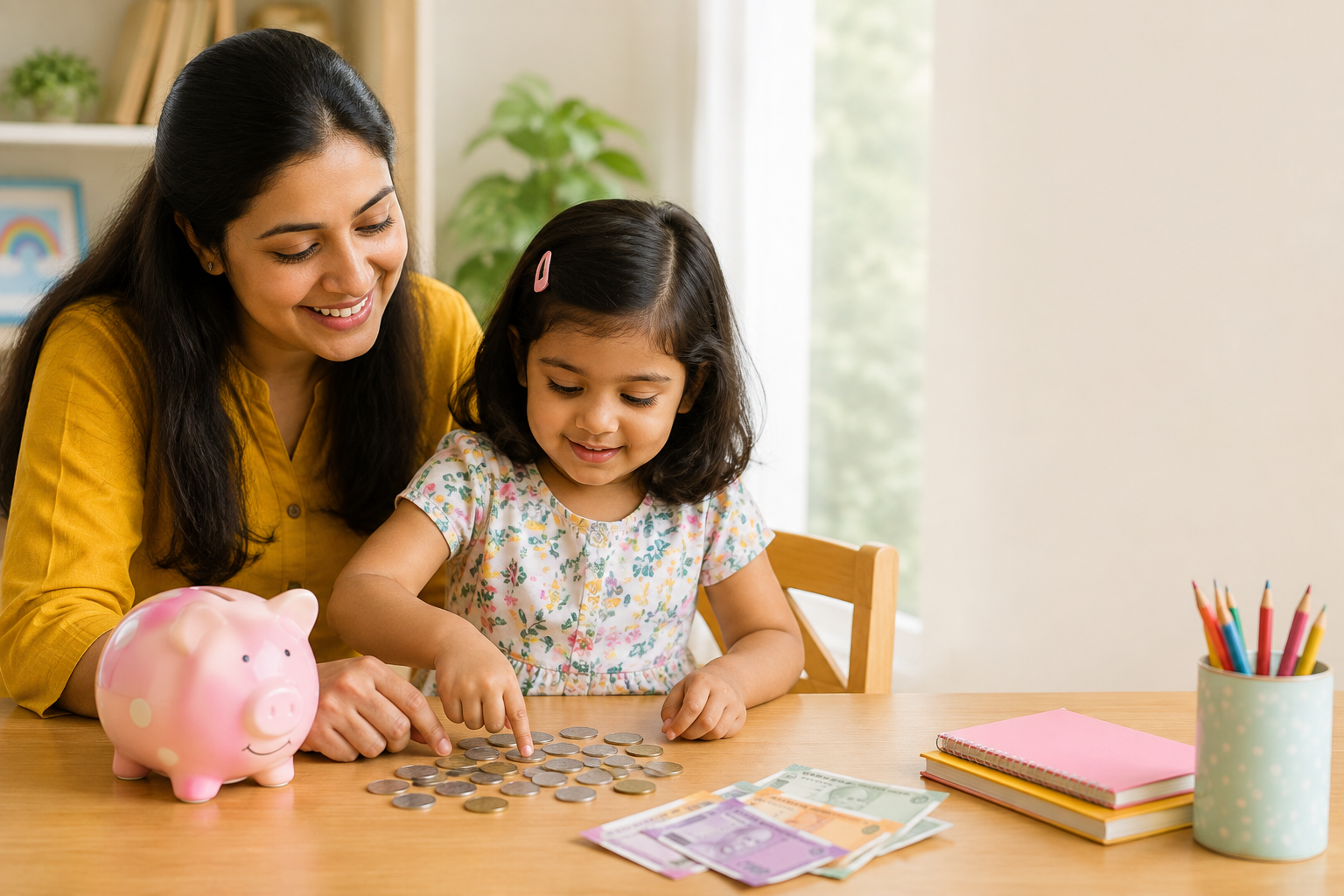
Teaching Money to Preschoolers: Where Do You Even Start?
You’ve childproofed the plug points. You’ve taught them to brush their teeth, tie their shoelaces, and say “thank you.” But somewhere on that long list of things every parent teaches, money often gets pushed to “later” — maybe when they’re older, maybe when they start earning pocket money, maybe when school finally covers it (spoiler: it usually doesn’t).
Here’s the truth: 4 to 7 years is actually the ideal age to start. Not because your preschooler needs to understand interest rates or budgeting spreadsheets, but because this is the age when they’re already learning *how the world works* — cause and effect, fairness, patience, choices. Money concepts fit naturally into that same learning window.
The good news? Teaching money to preschoolers doesn’t require lessons, worksheets, or even mentioning the word “finance.” It happens in the small, everyday moments you’re probably already having with your child — the insistence on that specific cartoon-character water bottle, the “I want a superhero-themed birthday party,” the “why can’t we go to Goa” — moments that already involve choices, value, and money, whether we label them that way or not. Let’s break down exactly where to start.
Why Age 4-7 Is the Right Time (Not Too Early)
A common worry parents have is: “Isn’t my child too young to understand money?”
Not really. Research in child development consistently shows that by age 3-4, children start grasping basic cause-and-effect (“if I do this, that happens”) and by age 5-6, they can understand simple concepts of exchange, ownership, and choice. Money, at its core, is just an extension of these ideas.
Think about it — your 5-year-old already has strong opinions on exactly how they want to spend: which birthday party theme they want, which holiday destination sounds most exciting, which toy they simply must have this time. That’s not a coincidence — it’s a sign they’re already forming preferences, making comparisons, and pushing for choices, which is precisely the mindset money decisions require.
These are the exact building blocks of financial literacy. You’re not starting from zero — you’re just giving these instincts a name and a context.
Start With Concepts, Not Currency
The biggest mistake parents make is jumping straight to coins and notes, assuming that’s “teaching money.” At this age, the concepts matter far more than the currency. Here’s what to prioritize first:
- Wants vs. Needs
This is the single most useful money lesson for a preschooler, and it’s simple to teach — mostly because your child is already giving you daily opportunities to teach it. The insistence on the ₹500 branded water bottle when the plain one at home works just fine. The specific stationery set with their favourite cartoon on it, when the notebook they already own has plenty of blank pages left. The “I want a Frozen-themed birthday party with a live ice-cream counter” request, inspired by a friend’s party last month. None of these need a lecture. Just gently ask: “Do we need this, or do we want this?” and let them answer. You’re not saying no to the want — you’re simply helping them notice the difference. Over time, this builds the instinct to pause and evaluate before every “I want it now,” which is the real foundation of financial literacy. - Waiting and Patience
Financial literacy, at its heart, is about delayed gratification — the ability to wait for something better instead of grabbing the first thing available. You can build this muscle with everyday moments: “Let’s wait until after dinner for that,” or “If you save this sticker instead of using it now, you’ll have three for your poster later.” None of this needs to involve money directly — you’re training the underlying skill that money decisions will later depend on. - Ownership and Sharing
“This is mine, that is yours” is a concept most 4-7 year olds are already navigating with siblings and friends. Use it to introduce the idea that money (and things bought with money) belongs to someone, has to be earned or given, and can be shared. This naturally leads into later lessons about saving for yourself versus giving to others.
Bring In Real Coins and Notes (But Keep It Playful)
Once the concepts are familiar, real currency becomes a fun, tactile way to reinforce them — not a formal lesson.
- Play “shop-shop.
Set up a pretend store at home with toys or snacks as products and give your child a small stack of coins or play money to “buy” things. This is one of the most effective, low-effort ways to introduce counting, exchange, and value. - Let them handle real money under supervision.
Hand your child a ₹10 note and a few coins next time you’re paying for something small, like a candy at the local store. Let them physically hand it over to the shopkeeper. This turns an abstract concept into a concrete, memorable experience. - Sort and count together.
A simple jar of coins and 10 minutes of sorting by size or counting together builds number sense and familiarity — no pressure, just play.
Use a Piggy Bank
A piggy bank is often a child’s very first introduction to saving, and it works because it’s visual and physical — they can see the amount of money grow.
For this age group, consider using three clear jars or piggy banks labeled Save, Spend, and Share instead of just one. Even without fully grasping the concept, your child will start associating money with three different purposes rather than one single pile to be spent. Every time they get a coin — from a grandparent, a small chore, or a found coin on the floor — let them choose which jar it goes into (with gentle guidance). This one habit, repeated over months, quietly builds the foundation for saving behavior later in life.
Turn Everyday Moments Into Lessons
You don’t need a dedicated “money lesson time.” Preschoolers learn best through repetition in everyday contexts. A few ideas:
- At the grocery store:
“We have ₹100 to spend on fruits today. Which ones should we pick?”
– When they ask for a specific birthday party theme: if your child wants an elaborate themed party — a bouncy castle, a magician, a specific venue — involve them in the trade-offs instead of simply saying yes or no. “We can have the magician or the special cake, which matters more to you?” This teaches them that choices have to be made, even with something they’re excited about. - When holiday season comes around:
Instead of deciding everything and simply announcing the plan, bring your child into it early. Start with something simple like, “This summer, where should we go on holiday?” and give them two or three options you’ve already shortlisted to choose from — a hill station, a beach, or grandma’s hometown, for instance. Let them “help” plan in small, tangible ways: sticking a coin into a “holiday jar” every week leading up to the trip, picking one activity they’re most excited about at the destination, or helping make a simple packing list of their own things. None of this requires explaining costs or budgets — it simply teaches them that things they look forward to often involve planning, waiting, and small contributions along the way, rather than just happening on demand. - At birthday time:
You got ₹500 from your grandparents. Would you like to spend some now and save some for later?” - During pretend play:
Encourage money-themed play — a toy cash register, a lemonade stand, a pretend restaurant — all of which naturally involve exchange, pricing, and choice. - While reading:
Picture books that touch on sharing, saving, or buying are a gentle, story-based way to reinforce these ideas without it feeling like a lesson.
Keep It Age-Appropriate — Don’t Rush
It can be tempting, especially once you start these conversations, to keep going — explaining how ATMs work, or what a bank account is, or why prices go up. Resist that urge. At 4-7 years old, too much information too soon tends to confuse rather than help, and can make money feel like a complicated, intimidating topic rather than a normal part of everyday life.
This is exactly why Finstart structures its programs by age — a 5-year-old and an 11-year-old are ready for very different depths of the same idea. For this age group, the goal is simply to build intuition and habits: noticing wants versus needs, waiting patiently, and making small choices. The mechanics — how banks work, what interest means, how to budget — belong to the next stage, and there’s no benefit in rushing there early.
The One Habit That Matters Most
If there’s just one thing to take away from this stage, it’s this: make money a normal, everyday topic in your home — not a secretive or stressful one. Children pick up far more from how they see money discussed and handled around them than from any single lesson. Calm, casual conversations about choices, waiting, and sharing — repeated often — do more than any single “money talk” ever could.
Starting early doesn’t mean starting complicated. It means starting now, with the small, everyday moments you’re probably already having.
—
Looking for a more structured way to build these habits? Finstart Kids is designed specifically for children aged 4-7, turning these foundational money concepts into simple, age-appropriate lessons your child will actually enjoy.
